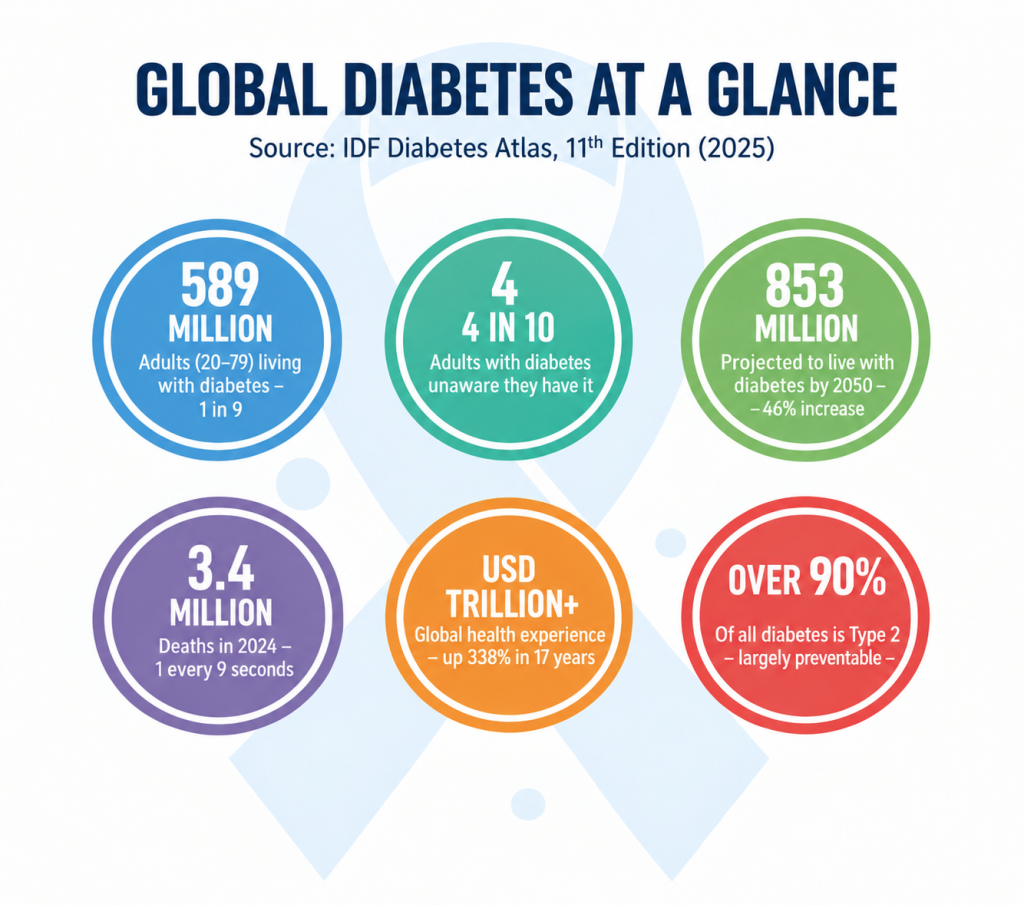
Diabetes has become the defining health emergency of our time. According to the International Diabetes Federation (IDF) Diabetes Atlas, 589 million adults worldwide now live with the condition; one in nine people aged 20–79, and that figure is projected to reach 853 million by 2050. More than 250 million of those affected do not know they have it. The disease claimed 3.4 million lives in 2024 and now consumes over USD 1 trillion in health expenditure annually, a burden borne disproportionately by low- and middle-income countries, where 81% of people with diabetes reside.
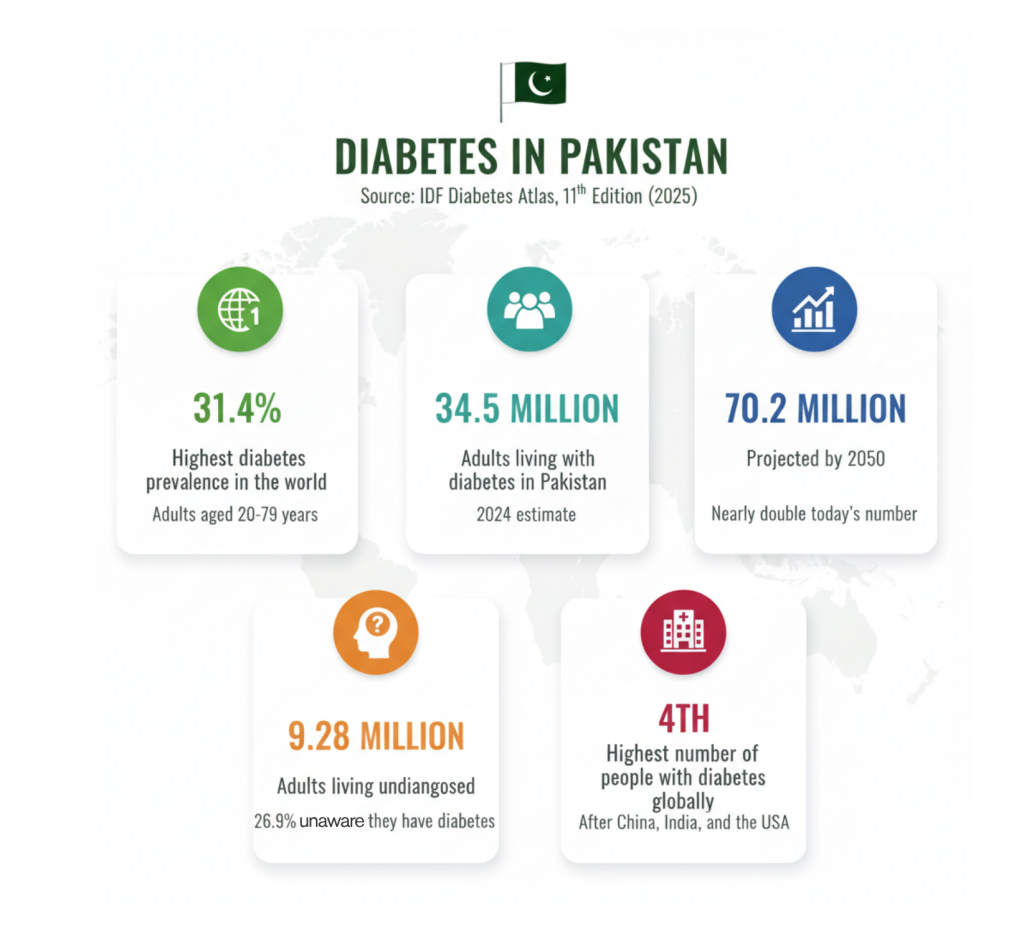
Nowhere is this crisis more acute than in Pakistan. The country has the highest prevalence of diabetes in the region and ranks among the highest globally by absolute numbers. In 2024, an estimated 34.5 million Pakistani adults were living with diabetes, a staggering leap from 8.8 million in 2000. Critically, 9.28 million of these cases remain undiagnosed, roughly one in four. That is not merely a statistic; it is a daily struggle between health and survival for millions of families.
The short-term impact is visible and immediate. Families shoulder ruinous out-of-pocket costs for medication, insulin and testing supplies, often forcing impossible choices between treatment, food and education. A father pushes through fatigue to keep working; a mother defers her own care to prioritize her children. For those without steady income, a diagnosis can tip a household from stability into destitution.
The long-term consequences are graver still. When care is delayed or out of reach, diabetes slowly and silently erodes the body – stealing eyesight, mobility, kidney function and, ultimately, a family’s only source of income. Undiagnosed disease accelerates this trajectory, converting a manageable condition into a source of avoidable blindness, amputation, heart disease and premature death. Left unchecked, the 70 million Pakistanis projected to have diabetes by 2050 will place an unsustainable strain on the country’s health system and economy.
None of this is inevitable. With steady, affordable intervention, earlier diagnosis, better public awareness and consistent access to treatment, these losses are preventable. Pakistan’s diabetes crisis is a national emergency, but it is one that decisive action can still reverse.